Sound & Screen 7 min read
8 Transistor Radio Myths We Still Get Completely Wrong
Think the transistor radio was just a cheap plastic toy? Here is the real history behind the portable gadget that quietly changed the modern world.
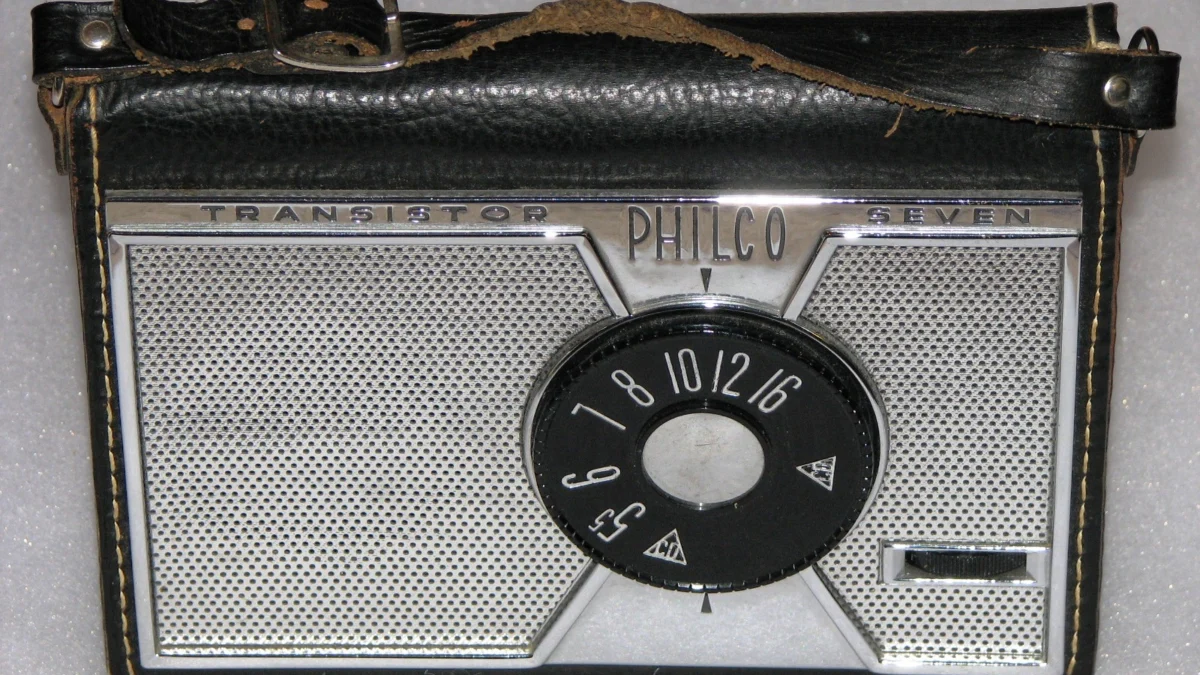

Nostalgia often paints the transistor radio as a cheap, disposable toy that teenagers instantly snapped up by the millions. We remember sunny beaches, pocket speakers blasting pop tunes, and secretive listening under bedroom pillows after lights out. It feels like a simple story of fun, rock and roll, and plastic convenience.
Yet our collective memory skips over the surprising realities of how these little boxes actually made their way into our lives. They were not always affordable gadgets for kids. They were not flimsy plastic novelties destined for the trash, and they certainly did not sound great right away. In fact, getting broadcast sound into a pocket-sized case took brilliant engineering, tricky home repairs, and a massive shift in how we understood electronics.
If you grew up twisting a tiny thumbwheel dial to find a faint station through the evening static, you know the magic was real. But how much of the folklore do you actually remember accurately? From high-end luxury prices to workbench soldering irons, here are the real truths behind the pocket radio revolution.
Number 1: Early Pocket Radios Were High-End Luxury Goods
Most people assume pocket radios were cheap teen novelties from the day they hit store shelves. The truth is quite the opposite. In 1959, an RCA Victor transistor radio was a prized luxury item costing around $35, which equaled a solid week of groceries for an average household.
Television commercials pitched these sleek sets to stylish adults packing leather luggage for golf trips or seaside vacations, not rock-crazed kids. Early models boasted polished metal dials, genuine cowhide cases, and weighed less than 12 ounces. You did not toss an RCA into a school bag to get battered against heavy textbooks. Carrying one signaled that you were a modern, upwardly mobile professional who could afford personal news on the move.
The sturdy case felt dense and substantial in your hand, much like a fine cigarette case or a Swiss watch. Teenagers only took over the market years later when Japanese mass production drove manufacturing costs down. The transistor revolution started in executive boardrooms, not high school hallways.
It was prestige you could carry in your suit pocket.
Source: 1959 commercial for RCA Victor Transistor Radio (1959)

Number 2: Many Enthusiasts Built Their Own Handheld Sets
You might think everyone bought their portable radios ready-made at high-street department stores. In reality, thousands of everyday listeners built their own handheld receivers from mail-order kit boxes.
In 1968, the Heathkit GR-24 portable radio arrived in homes as a cardboard box packed with loose resistors, a bare circuit board, and 6 germanium transistors. Hobbyists spent over 8 hours at kitchen tables carefully soldering every connection under a desk lamp. One slip of a 25-watt soldering iron could easily destroy a heat-sensitive transistor, turning a weekend project into a frustrating hunt for replacement parts.
Building your own kit was partly about saving money, but it was mostly about pride. You smelled the bitter resin flux melting as you wired the earphone socket and aligned the tuning dial. When you finally clicked the switch and heard a local broadcast burst through the tiny speaker, the sense of accomplishment was unforgettable. You did not just purchase a gadget off a retail shelf.
You built the doorway the music walked through.
Number 3: Kitchen Tinkerers Proved Solid-State Tech Worked on Pennies
People often believe early transistor technology was an industrial secret restricted to military labs and corporate giants. Yet ordinary tinkerers proved you could assemble working solid-state receivers right on a kitchen cutting board.
In 1960, popular electronics magazines published simple step-by-step schematics that let hobbyists build functional radios for less than $2 in spare parts. Old tube sets had demanded bulky 90-volt high-tension batteries that ran scorching hot and drained power fast. The new germanium transistors flipped the script by running happily on a single 1.5-volt penlight battery for weeks at a time.
Builders wound their own coils around cardboard tubes and housed the bare circuits inside plastic soap boxes or matchboxes. You did not need a factory cleanroom or fancy tools to harness the technology. Hearing clear voices emerge from a homemade assembly smaller than 3 inches felt like pure wizardry. Miniaturization was not just born in industrial research labs.
The future was pieced together on kitchen tables.
Source: [Transistor projects [originally appearing in Radio-electronics magazine] (1960)](https://archive.org/details/transistorprojec00unse_0)
Number 4: Primary School Kids Were Taught Transistor Assembly
We tend to imagine 1970s schoolchildren interacting with modern technology only as passive listeners. In Britain and across the Commonwealth, millions of young kids actually learned to build radios from scratch.
In 1972, the beloved British publisher Ladybird printed a classic handbook showing 10-year-olds how to construct a functioning receiver on a block of wood. Ladybird books were famous pocket-sized hardbacks known for clear instructions and warm, full-colour paintings. Instead of delicate printed circuit boards, young readers were taught to press brass drawing pins into a 7-inch block of softwood to serve as sturdy solder points.
Using a single transistor, a germanium diode, and a standard 9-volt battery, children could assemble a working receiver for roughly 50 pence in loose electronic components. It demystified modern technology during a rainy afternoon project. You learned that radios were understandable machines built of physical parts, not mysterious sealed boxes.
It turned curious children into confident young tinkerers.
Number 5: Broken Radios Were Repaired Rather Than Trashed
Today we treat small broken electronics as disposable plastic rubbish destined for the nearest bin. In the early solid-state era, a malfunctioning radio was carefully repaired on a service bench.
In 1960, taking a dead portable set to a local radio technician was standard practice. Technicians charged about $3 to trace broken solder joints, test open coils, and replace tired capacitors. Service manuals provided detailed wiring diagrams and precise instructions for testing the 455 kHz intermediate frequency stages. Because early transistor sets represented a real financial investment, throwing one away over a cracked circuit board was unthinkable.
Repairmen used magnifying lenses and fine tweezers to navigate the cramped boards without scorching the plastic housing with their irons. A quality radio was an enduring household tool meant to survive years of picnics, sporting matches, and morning commutes. If a component gave up, you had it fixed and carried on listening.
We used to respect our gadgets enough to mend them.
Number 6: Tube Repair Shops Needed Entirely New Diagnostic Gear
It is easy to assume that experienced tube radio mechanics transitioned to fixing transistor sets without missing a beat. In fact, old-school repair shops found their existing tools utterly useless on modern solid-state boards.
In 1962, repair shops had to invest in brand-new specialized diagnostic instruments like the B&K 960 radio analyst. Traditional valve radios operated on high direct currents between 100 and 300 volts. Transistors, by contrast, ran on delicate direct currents as low as 6 volts. Probing a tiny transistor with an old high-voltage tube tester would destroy delicate germanium junctions in a fraction of a second.
Makers of shop equipment rushed out new signal generators that could safely inject test tones into miniaturized stages without frying components. Technicians who had spent thirty years reading the warm orange glow of glass tubes had to learn printed circuit traces and millivolt measurements from scratch. It was a stressful technical hurdle for small-town repair businesses everywhere.
The technology got smaller, but the learning curve grew huge.
Number 7: Transistor Radios Reached Far Beyond Local Pop Stations
Nostalgia often narrows the transistor radio down to a teenager listening to local pop music on an AM dial. Yet solid-state portables also served as powerful long-distance communication hubs.
In 1974, European makers like Philips manufactured sophisticated multi-band portables capable of pulling in shortwave broadcasts from halfway around the globe. While pocket models had small internal ferrite antennas, multi-band portables came equipped with extendable 36-inch chrome aerials. These receivers could lock onto the 19-meter and 31-meter international bands, bringing live commentary from London, Paris, or Tokyo straight to a campsite table.
In regions like rural Australia, Africa, or remote parts of North America where local stations were scarce, a battery-powered shortwave portable was an indispensable link to the world. A set could run for over 50 hours on a single pair of heavy D-cells. You sat in the evening quiet, carefully nudging the dial through crackles and whistles to hear a distant voice.
The globe felt vast, yet you held it in your lap.
Source: Philips Transistor Radio Service Manual Circuits Vol 3 1971 1973 (1974)

Number 8: Earphones Created Modern Private Listening Culture
Many music fans assume that personal, isolated headphone culture began when the Sony Walkman arrived in 1979. In reality, private listening was already thriving through single radio earpieces a generation earlier.
In 1973, practical radio guides by authors like R.H. Warring highlighted how personal listening had reshaped radio habits. The secret was the white crystal earphone, plugged directly into a 3.5 mm jack on the radio’s side casing. Because miniature speakers produced tinny sound and drained 9-volt batteries quickly, the tiny earpiece delivered clearer audio while conserving precious power.
More importantly, it gave listeners absolute privacy. Teenagers ran the thin wire inside an oversized shirt sleeve or listened secretly under their blankets late at night without disturbing parents down the hall. You no longer had to gather around the family console radio in the front room to hear your favorite program. That humble earphone gave us our very first taste of an audio world created for one.
It was the quiet birth of personal isolation.
Source: Build Your Own Transistor Radio (1973)
The transistor radio did not just shrink our audio gear. It dismantled the old living room hearth and gave everyone a private, portable soundtrack for the very first time. From luxury novelty to kitchen workshop project, it reshaped our relationship with sound forever. Did you own a pocket radio, or build one at your kitchen table? What was the first broadcast you remember pulling through that tiny earpiece?