Work & School 6 min read
8 Things We Misremember About the Old Telephone Directory
Think you know your way around an old phone book? You might be surprised by how these massive, paper-filled icons actually worked in our daily lives.
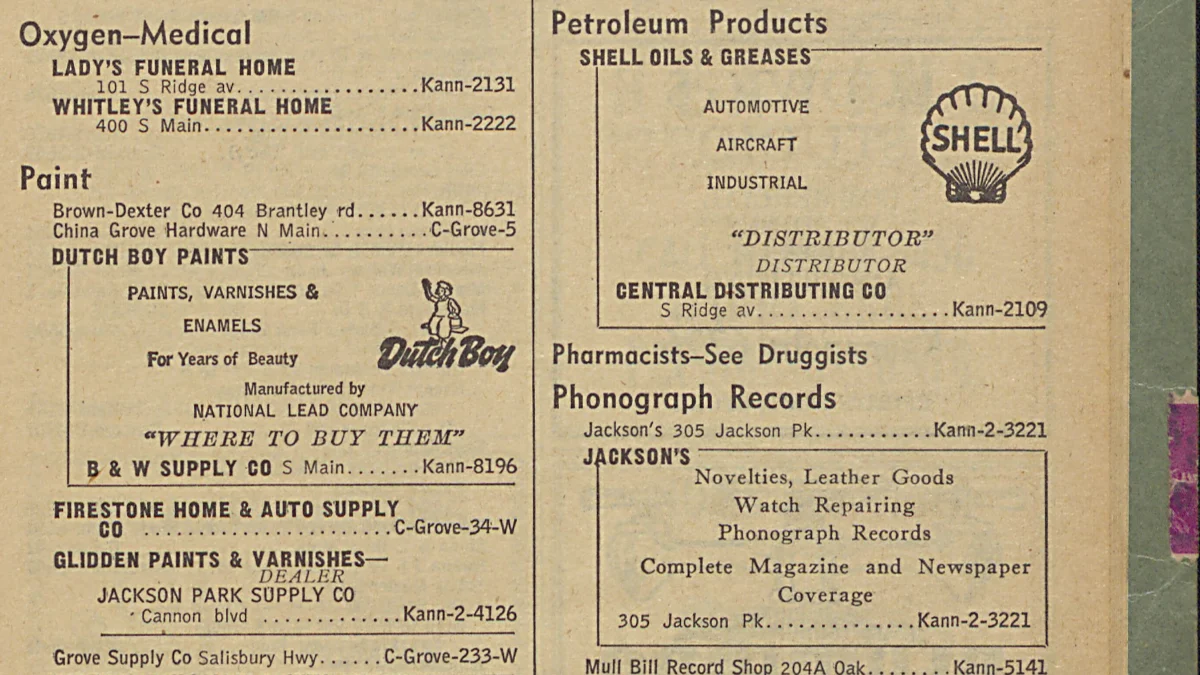

You might recall the telephone directory as a simple list of names. In truth, it was a complex social tool that defined how we found our neighbors, businesses, and government officials. For decades, these hefty paper volumes sat by every hallway table, functioning as the primary gateway to the outside world. Whether you were searching for a local plumber or a distant relative, the directory was your first and often final stop.
We often forget the sheer weight of these items. They were physical anchors, usually measuring about 12 inches tall and often weighing several pounds. Before the internet turned everything into a searchable database, you had to flip through thin, gray newsprint pages with your fingers, praying you hadn’t missed the name you were hunting for. It was a tactile experience, one where the smell of ink and the texture of paper meant you were about to make a connection. Let us look at how these books really functioned, and why they were much more than just lists.
Number 1: Reverse Directories Did Not Just List Every Phone Number
Many believe the 1935-1936 Numerical Telephone Directory was just a list of random digits. Actually, these books were organized by number first, allowing you to identify an unknown caller by their digits. If you received a mysterious call, you could look up the 7-digit sequence to find the caller’s address in minutes.
This source is a relic from a time when the telephone was a new, often intrusive technology in the home. In the 1930s, people were cautious about who could reach them, and tracking incoming calls felt like a necessary security measure. It feels strange now, doesn’t it? To verify an identity, you had to physically travel to your shelf and scan through a thick printed book rather than just glancing at a screen. Those were the days when mystery callers truly existed.
Source: Numerical telephone directory

Number 2: Department of Defense Directories Served More Than Military Bases
Some think the United States Department of Defense directory from 1999 was strictly for soldiers. In fact, these binders contained thousands of direct lines connecting civilians to federal offices, providing a level of public access that seems impossible today. Within those 800 pages, anyone could find the desk phone of a specific official without needing security clearance.
It was a different era of bureaucracy. You might spend 10 minutes dialing through an automated system to reach someone who actually answered the phone. The physical act of holding a directory gave you a sense of power; you were looking at the internal map of a massive, sprawling institution. It was comforting to know that, somewhere in that maze, a person was sitting at a desk waiting to talk to you.
Number 3: Street Directories Organized Cities by Geography, Not Just Alphabet
It is a mistake to think the 1940 Pacific Telephone street address directory simply listed names in order. Instead, it was organized by street name, meaning you could see everyone living on a single block at once. If you wanted to know your neighbors, you checked your street, which listed every household within a 2-mile radius.
This format changed how you viewed your own community. You did not just find a person; you found a place. Seeing 50 names listed on one street made the city feel smaller and more interconnected. It was a map made of text, showing who lived near the local bakery or the bus stop. It was intimate, and frankly, a little invasive by today’s standards, but it made us feel like we belonged to a specific, solid neighborhood.
Source: Oakland, Alameda, Berkeley and San Leandro street address telephone directory
Number 4: Canadian Provincial Directories Were Not Just Regional Listings
Many people assume the 1999 Canadian telephone directory for the Atlantic and Ontario regions was a small, local pamphlet. Actually, this beast was a massive collection covering thousands of miles and millions of subscribers across the country. Weighing nearly 5 pounds, the book was almost too large for a standard telephone stand.
Managing such a vast amount of data in one place was a feat of organization. You could flip through the white pages to find a friend in a town 500 miles away, provided you knew their last name. It was a strange kind of national unity, held together by cheap paper and tiny font. Does anyone remember the frustration of seeing a family name repeated 20 times in a column, forcing you to check every single address to find the right one?
Source: Telephone directory. Atlantic, Quebec, Ontario, Western Region and B.C./Yukon = (1999)
Number 5: University Directories Were Essential Tools for Campus Life
It is a myth that the 2011-2012 University of Memphis directory was replaced entirely by email lists. In reality, thousands of students and faculty still used this print edition to locate offices and departments across the 1,600 acre campus footprint. Even in the digital age, having a paper copy of the staff list was the fastest way to verify a room number.
There was something tactile about it. You would keep the directory in your backpack, dog-earing the pages for the library or the registrar. It felt official, like you were finally part of the university structure. While everyone had a smartphone by 2011, the printed directory was a final holdout, a testament to the old habit of putting physical items on desks. It was the last generation to rely on a book for connection.
Source: The University of Memphis Students-Faculty-Staff Telephone Directory, 2011-2012 (2011)
Number 6: Extended Area Directories Handled Massive Populations Before the Internet
Some assume the 1939 Los Angeles extended area directory covered just the city center. In truth, it managed the sprawling connections of a metropolitan region that stretched across 400 square miles of territory. With over 200,000 entries, it was a massive document that required heavy-duty binding to survive daily use.
Imagine trying to find a name in a city that large without a search bar. You were guided by alphabetical sections that seemed to go on for days. The sheer density of information meant that a simple error could send you calling the wrong person entirely. It was an exhausting, manual process that taught us patience. You had to respect the book’s size, knowing that it held the numbers for almost everyone you might ever need to call in your life.
Number 7: Government Directories Were Not Just for Routine Business
People often think the 2002 Ottawa-Gatineau government directory was just a list of telephone extensions. Actually, it was a vital political resource that mapped out the reach of departments across the capital. With over 300 pages of listings, it provided the direct line to local officials who managed everything from taxes to city infrastructure.
It felt important to hold that book. By dialing a number found inside, you felt like you were participating in the civic process. It was a tangible connection to the people who ran the city. If you had a question, you didn’t click a button; you found the correct department, verified the number, and held your breath as the phone rang. It was a slow, deliberate form of communication that left you feeling like your voice had finally been heard by someone real.
Source: Telephone directory: Ottawa-Gatineau (2002)

Number 8: San Mateo County Directories Defined Local Identity
It is incorrect to think the 1955 San Mateo County directory was just a list of phone numbers for the suburbs. It was a community diary, featuring hundreds of advertisements for local hardware stores and family diners that defined the area’s culture. For residents, this book was a 500-page portrait of a growing community after the war.
You knew exactly which dry cleaner was the best because their ad was front and center on the yellow pages section. It connected you to the local economy in a way that modern apps cannot replicate. You weren’t just looking for a number; you were looking for your neighbors and their businesses. When the book arrived on your doorstep, it was an event. You would browse the ads, feeling connected to the shops you visited every single Saturday morning.
Source: Telephone directory for communities in San Mateo County (1955)
The physical telephone directory is now a relic of a slower, more deliberate past. We traded the weight of a 5-pound book for the convenience of a search bar, but something was lost when the paper stopped hitting our doorsteps. Do you remember the specific smell of the old, thin yellow pages, or was that just the scent of waiting for someone to finally pick up the phone?