Retro Technology 9 min read
9 Ways the Kodak Brownie Captured the Mid-Century Dream
Before high-definition phones, the Kodak Brownie turned amateur snapshots into our most cherished memories. Let's revisit the era of film and flashbulbs.

You might remember the satisfying, heavy click of a camera box that felt like it held the world inside. For decades, the Kodak Brownie was the household staple that turned family outings into lasting proof that we were there, together. These cameras were not just tools; they were the gatekeepers of our collective history.
Photography was once an intentional act. You loaded the film, checked your light, and hoped for the best before waiting weeks for prints to arrive by mail. For those of us who grew up in the middle of the last century, these machines were our first real encounter with the magic of freezing time. Whether you were capturing a birthday party or a trip to the local beach, the process taught us patience and the value of a single frame.
As we look back, it is easy to forget how much effort went into making those images. From the bright flash of a bulb to the spinning reels of a home projector, the experience was tactile and loud. Grab your coffee and join me as we walk through the golden age of these iconic cameras, decade by glorious decade. We will see how these boxes of plastic and glass shaped how the world viewed itself, one 12-exposure roll at a time.
Number 1: The 1957 Turret Camera Brought Hollywood Into Living Rooms
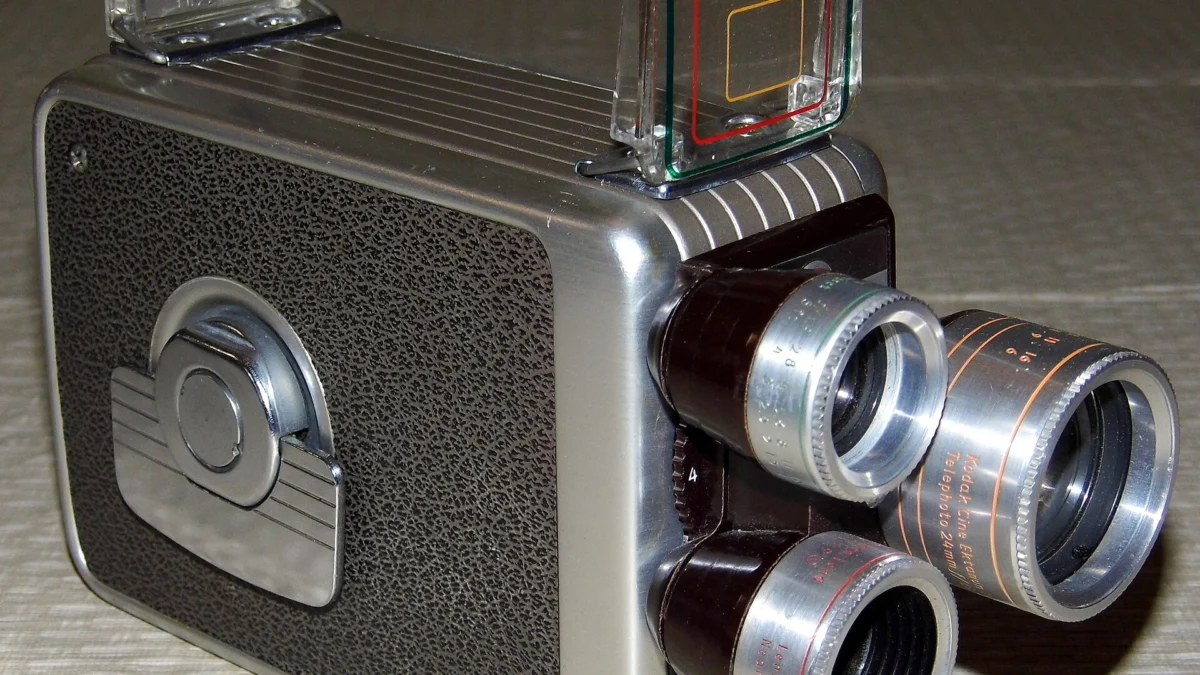
In 1957, the Kodak Brownie Turret Movie Camera promised the average parent a professional look for their home footage. By twisting the lens turret, you could toggle between three different viewpoints in seconds. It was a marvel of 1950s engineering that made filming the backyard barbecue feel like a major cinematic production.
These cameras often used 8mm film, providing roughly 3 minutes of recording time per spool. You had to learn how to wind the spring-driven motor perfectly, or your film would slow to a crawl just as the action peaked. At a weight of nearly 2 pounds, the metal chassis felt sturdy and reliable in your hands during those long summer afternoons.
It changed the way families documented their lives forever. No longer were we limited to still images that failed to capture the chaotic energy of children running through a sprinkler. The turret allowed you to zoom in for a close-up without ever needing to move your feet. It felt like owning a tiny, magical factory for memories that would last for generations. Even if the exposure was slightly off, the warmth of the colors made every frame look like a beautiful dream.
Source: 1957 commercial for Kodak Brownie Turret Movie Camera (1957)

Number 2: 1957 Starflash Cameras Made Indoor Photography Simple For Everyone
Before the 1957 Kodak Brownie Starflash, taking indoor photos often required complex lighting setups that felt like a science experiment. This camera changed the game by integrating a flash system directly into the body. You could simply slide a disposable flashbulb into the top, aim, and shoot without worrying about external cords or bulky battery packs.
The camera was small enough to fit in a coat pocket, measuring only about 5 inches in width. It utilized 127 film, which was popular for its compact size and decent quality for standard prints. Buying a box of bulbs meant you were ready for any party or evening gathering where the light was too dim for traditional gear. It made the user feel like a professional photographer during family holidays.
There was a certain tension in those moments, waiting for the bulb to pop with a bright, hot spark. You had to be careful not to touch the glass, as it reached high temperatures in seconds. Despite the minor risks, it gave us our first clear shots of dinner parties and indoor cake cuttings. It was the moment home photography became truly democratic and accessible to everyone.
Source: 1957 commercial for Kodak Brownie Starflash and Starflex cameras (1957)
Number 3: Home Movie Cameras Defined the 1958 Holiday Experience
By 1958, the Kodak Brownie home movie camera had become the must-have item for keeping track of seasonal growth. These cameras were designed to be used by anyone, regardless of technical experience, by focusing on ease of operation. With an aperture adjustment dial that took only 2 seconds to set, you were ready to film almost immediately.
The film reels lasted about 90 minutes in total length if you edited together several small spools from throughout the year. Many of us remember the specific sound of the camera motor whirring, a low-frequency hum that signaled a special event was happening right now. It was common to see dads standing on lawn chairs to get a better angle on the family, tripod in hand.
Looking back at these films today provides a window into a world that felt slightly more innocent. The grain of the footage gives everything a soft, nostalgic glow that digital cameras simply cannot replicate. It was never about the perfection of the image, but the sincerity of the moment. We held onto these reels like treasures, knowing they contained the only record of our younger selves.
Source: 1958 commercial: Kodak Brownie home movie camera (1958)
Number 4: The 1958 Starmatic Taught Us About Automatic Exposure
The 1958 Kodak Brownie Starmatic was one of the first cameras to introduce a photoelectric eye to the mass market. This feature allowed the camera to measure ambient light and set the shutter speed for you automatically. It was a massive leap for a device that cost less than 30 dollars at the time, making it a bargain for families.
Measuring just 6 inches in height, it was the perfect size for a vacation. You could drop it into a suitcase alongside your bathing suit and not worry about the extra weight. It felt like having a built-in computer that made the hard decisions so you could focus on the composition. If the light was too low, the camera warned you, preventing wasted film.
This device bridged the gap between the simple box cameras of the past and the sophisticated SLRs that would define the 1970s. It gave many of us our first taste of control over lighting and focus. Even if we didn’t fully understand the physics, we felt like experts. It turned every trip to the park into a chance to experiment with light and shadow.
Source: 1958 commercial for Kodak Brownie Starmatic camera (1958)
Number 5: 1959 Movies Brought Dynamic Action To Our Living Rooms
In 1959, the Kodak Brownie movie camera marketing emphasized the thrill of capturing movement. The advertisements showed vibrant scenes of children playing on bicycles, emphasizing that the camera was fast enough to catch every turn. It offered a frame rate of 16 frames per second, which was the industry standard for home cinematography at the time.
The cost of the film, which often sold for around 5 dollars per roll, made the act of filming feel like an investment. You did not waste a frame on something trivial; you saved it for the big milestones. Whether it was the first day of school or a holiday parade, the camera was always within reach on the mantlepiece.
Watching the movies later was a ritual of its own, involving a projector and a white sheet pinned to the wall. The dust motes dancing in the light beam added a magical quality to the room. We would laugh at our own mistakes and marvel at how quickly the years had passed. It remains one of the most vivid sensory memories of the decade for many of us.
Source: 1959 commercial for Kodak Brownie home movie camera (1959)
Number 6: The 1960 Starmite Made Night Shots Possible Everywhere
The 1960 Kodak Brownie Starmite was a revolutionary compact camera that used miniature flashbulbs to change night photography forever. Before this, flash systems were often bulky and required large, expensive batteries. The Starmite, however, was small enough to fit inside a 4-inch deep pocket, yet it packed enough power to illuminate an entire living room at night.
Using a standard flashbulb that cost mere cents at the local drugstore, you could shoot after dark with ease. The simplicity of the Starmite meant you never missed the chance to capture a bedtime story or an evening party. It was light, portable, and remarkably effective for its tiny 3-inch frame size.
For many children, the sight of a Starmite coming out of a drawer meant a fun night was ahead. The flash would emit a bright, startling light that signaled a memory was being made. It was not just a tool; it was a companion to the joy of gathering together after the sun went down. Does the smell of burnt flashbulb glass still trigger a childhood memory for you?
Source: 1960 commercial for Kodak Brownie Starmite camera (1960)
Number 7: 1961 Projectors Turned Living Rooms Into Private Cinemas
By 1961, the Kodak Brownie film projector was the centerpiece of home entertainment in many households. It was designed to handle the 8mm film that most Brownie cameras produced, offering a clear image on a screen that could be over 40 inches wide. The mechanical clicking of the film advancing through the gate was the soundtrack to our weekends.
The projector cost about 50 pounds in the UK market, making it a significant household purchase that invited social gatherings. You would darken the room, set up the chairs, and let the flickering beam of light bring the past to life. It was a shared experience that connected parents, children, and even extended family members through visual storytelling.
The act of threading the film was a delicate skill that required steady hands. If you didn’t catch the loop correctly, the film would catch and potentially tear, causing panic in the audience. Yet, when everything worked, it was pure magic. Those projector beams turned ordinary living rooms into theaters, reminding us of everything we had achieved and grown through in the last 12 months.
Source: 1961 Classic TV Commercial for ”Kodak Brownie Film Projector”
Number 8: The 1961 Movie Camera Captured the Joys of Growth
Marketing in 1961 for the Kodak Brownie movie camera focused heavily on the concept of capturing youth. The advertisements were filled with images of families at the beach or in the backyard, highlighting that the camera was easy to use with only 1 button to press. It allowed parents to document the rapid changes of their children, ensuring those early years were never forgotten.
The cameras of this era were often sold in bundles that included a sturdy carrying case. This allowed you to protect your 2-pound device while on the move, keeping it safe from sand, dirt, and clumsy hands. It was the ultimate record-keeping machine for a generation that prioritized family stability and memory-making above all else.
We spent hours curating these films, editing out the blurry bits and adding title cards to explain what we were seeing. It was a labor of love that created a bridge to our past. Today, looking at those 60-year-old reels, you realize that the technology was secondary. The true value was in the time we spent looking at each other, recorded in frames that outlived the cameras themselves.
Source: Kodak Brownie Movie Camera Ad – 1961 (1961)

Number 9: The Six-20 Model C Remains A Timeless Design Classic
While newer models emerged, the Kodak Brownie Six-20 Model C remains an icon of classic 20th-century design. Introduced to provide a reliable, simple experience, it utilized a folding mechanism that allowed the camera to be as small as 2 inches deep when closed. It was a triumph of form and function that taught many of us the basics of framing a scene.
The simple lens and shutter system required no complex knowledge, making it a perfect tool for a child’s first camera. With a body measuring roughly 8 inches in length when extended, it felt sturdy and significant in the hands of an adult or a teenager. You learned to keep the camera steady for the 1/25th of a second shutter duration to avoid blurry images.
There is something inherently honest about a camera with so few moving parts. It did not try to hide the process of photography; it invited you to participate in it. You had to think about your subject and your light before you pressed the button. It reminds us that sometimes, the best way to capture a memory is to simplify the tools you use to hold it.
Source: Kodak Brownie Six 20 Model C camera (2021)
We have traveled from the boxy simplicity of the 1950s to the more sophisticated, automated gear of the early 1960s. These machines were more than just plastic and metal; they were the guardians of our most cherished family memories. They taught us to observe, to wait for the right light, and to hold onto the moments that truly mattered. When you look at your own photos today, do you still feel that same thrill of capturing something real, or has digital convenience changed how you remember the past?